



Manhattan New Development and Luxury Market Update
Posted by Wei Min Tan on July 30, 2026



The second quarter of 2026 painted a fascinating picture of Manhattan‘s residential market. While the broader market continued to grapple with limited inventory and affordability challenges, two segments stood out for very different reasons: new development and luxury properties.
New development pricing softened even as average transaction values surged, while the luxury market experienced modest price adjustments amid exceptionally tight inventory. Together, these trends reinforce a theme that has defined Manhattan for much of the past year: scarcity remains the dominant force. Inventory continues to contract, limiting buyer choice even as demand remains healthy. (Housing Notes)

Read about Wei Min’s style in Best Manhattan property agents and Role of a buyer’s broker.
Manhattan New Development
What the Numbers Mean
At first glance, the statistics appear contradictory.
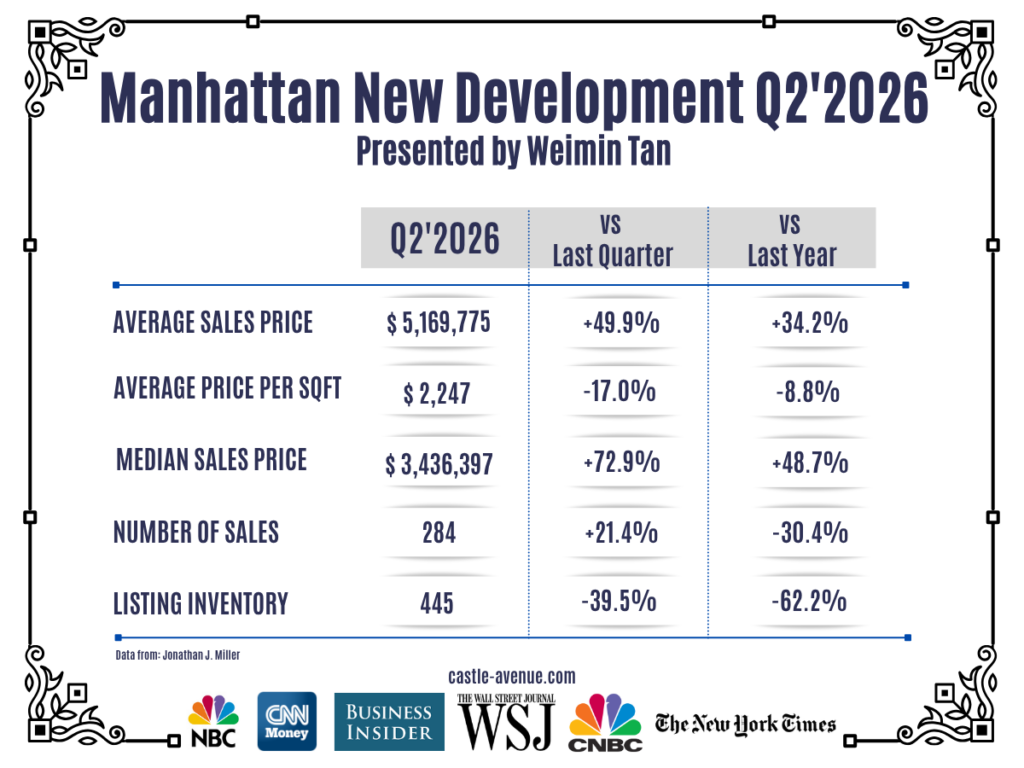
The average sales price increased nearly 50% quarter-over-quarter, while price per square foot declined 17%. Rather than indicating rapidly appreciating values, this usually reflects a shift in the mix of homes that closed during the quarter.
Larger residences and penthouses often command higher overall prices but lower price-per-square-foot figures than smaller luxury apartments. When more of these larger units close, average prices rise while PPSF falls.
The median sales price climbed even more sharply, suggesting that buyers continued purchasing higher-value new developments despite broader economic uncertainty.
Perhaps the most important statistic, however, is inventory.
With only 445 available listings, supply fell almost 40% from last quarter and more than 60% compared with one year ago. This is an exceptionally tight level of inventory and remains one of the primary reasons pricing has remained resilient despite higher interest rates. (Housing Notes)
Takeaways
- Larger residences represented a greater share of closings.
- Pricing remains healthy despite lower PPSF.
- Inventory continues to shrink dramatically.
- Limited supply should continue supporting pricing over the medium term.
Weimin’s article, Pros and Cons of New Property Launches in Manhattan
Deal Example: Client’s condo in Midtown East, close to United Nations, Blackstone, Blackrock headquarters. We booked at pre-construction, rented out immediately after closing.
Manhattan Luxury Segment
What the Numbers Mean
Unlike new development, Manhattan’s luxury market was relatively stable.
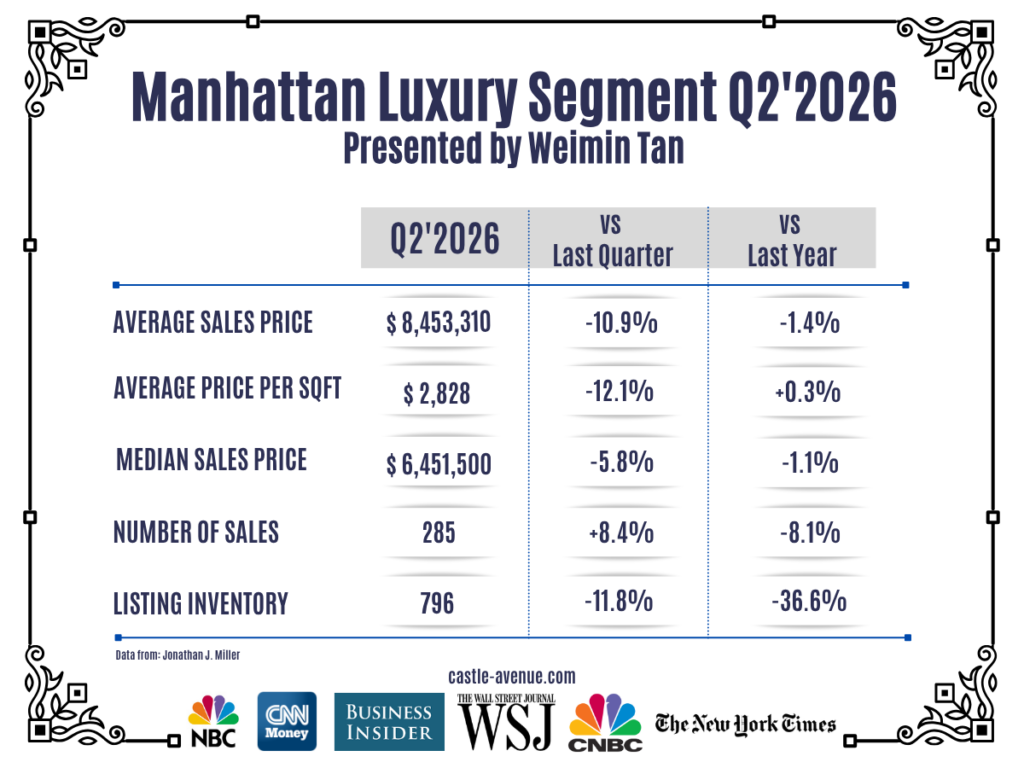
Average and median prices declined modestly from the previous quarter, but year-over-year changes remained remarkably small. Price per square foot was essentially unchanged compared with last year, suggesting values have largely stabilized rather than entered a meaningful correction.
Sales activity improved from Q1, with transactions increasing more than 8%, indicating buyers remain active when attractive opportunities become available.
Again, inventory tells perhaps the most important story.
Luxury listings declined nearly 37% from one year ago, leaving buyers with significantly fewer choices. Historically, sustained inventory declines have tended to provide long-term support for pricing, particularly in Manhattan’s highest-quality buildings. (Housing Notes)
Takeaways
- Luxury prices remain broadly stable.
- Buyer demand continues despite higher financing costs.
- Inventory remains historically constrained.
- Well-priced properties continue to attract buyers quickly.
Weimin’s article, Manhattan Luxury Property Market, What Does It Mean?
Deal example: Represented multiple clients at 125 Greenwich Street. There was a repricing of the units from original launch. Amenities on 86th to 88th floors, commands top rents. 
What This Means for Buyers
For buyers, today’s market remains highly selective.
The slowdown in price-per-square-foot growth has created opportunities in certain buildings, particularly where developers are motivated to complete sellouts or individual sellers are pricing realistically.
However, shrinking inventory means buyers have fewer options than at almost any point in recent years. Waiting for significantly lower prices may prove difficult if supply continues to contract.
What This Means for Sellers
Inventory remains one of the strongest arguments in favor of selling.
When supply is limited, quality properties face less direct competition. Sellers who price appropriately continue to benefit from a market where serious buyers have relatively few comparable alternatives.
Proper pricing remains critical, however. Today’s buyers are sophisticated, well-informed, and quick to recognize when a property represents value—or when it does not.
Looking Ahead
Heading into the second half of 2026, several themes are worth monitoring:
- Inventory levels and whether they begin to normalize.
- New development absorption as additional projects deliver.
- Luxury buyer demand following recent tax and policy changes.
- Interest rate trends and their impact on financing-sensitive buyers.
While quarterly figures will inevitably fluctuate based on the mix of transactions, the underlying story remains consistent: Manhattan continues to be a supply-constrained market. As long as inventory remains historically low, significant downward pressure on pricing appears limited, particularly for well-located, high-quality properties. (The Real Deal)
What We Do
We focus on global investors buying Manhattan condos for portfolio diversification and long term return-on-investment.
1) Identify the right buy based on objectives
2) Manage the buy process
3) Rent out the property
4) Manage tenants
5) Market the property at the eventual sale