New Development Condos on Manhattan’s Upper East Side (2026 Edition)
Posted by Wei Min Tan on June 1, 2026



For decades, Manhattan’s Upper East Side was defined by classic prewar cooperatives, established residential blocks, and traditional architecture. Today, a new generation of condominium developments is reshaping the neighborhood — combining modern infrastructure and amenities with the scale and permanence many buyers still associate with classic New York living.
Unlike many Downtown Manhattan neighborhoods that lean more heavily toward smaller investor-oriented layouts, Upper East Side new developments are often designed around larger residences, quieter residential streets, and long-term ownership. Many buyers here are purchasing for personal use, multi-generational living, or long-duration wealth preservation rather than purely short-term investment returns.
At the same time, buyers should understand that the Upper East Side condominium market functions differently from many Downtown submarkets. Rental demand tends to be more residential and lifestyle-oriented, and landlords may face greater competition from other condominium owners in the area. Rental yields are also often more modest relative to some Downtown neighborhoods.

Read about Wei Min’s style in Best Manhattan property agents and Role of a buyer’s broker.
Why Buyers Continue to Gravitate Toward the Upper East Side
The Upper East Side continues to attract buyers seeking:
-
- Larger and more practical layouts
- A quieter residential atmosphere
- Access to Central Park and Museum Mile
- Established restaurants and retail corridors
- Long-term wealth preservation characteristics
- Full-service luxury buildings with more traditional architecture
The neighborhood has evolved considerably over the past decade, particularly east of Lexington Avenue, where the Second Avenue Subway improved accessibility and helped support additional luxury condominium development.
Popular restaurants in the neighborhood include Daniel, Sant Ambroeus, Café Boulud, Antonucci Cafe, and The Mark Restaurant by Jean-Georges.
Wei Min’s article, Manhattan property investment performance
Deal example: 300 E 64 St, Upper East Side. Top amenity building in the 60s with an amazing roof deck with BBQ grill (pictured), a WOW factor for tenants. At purchase, the Q subway line extension was in progress and it is now completed.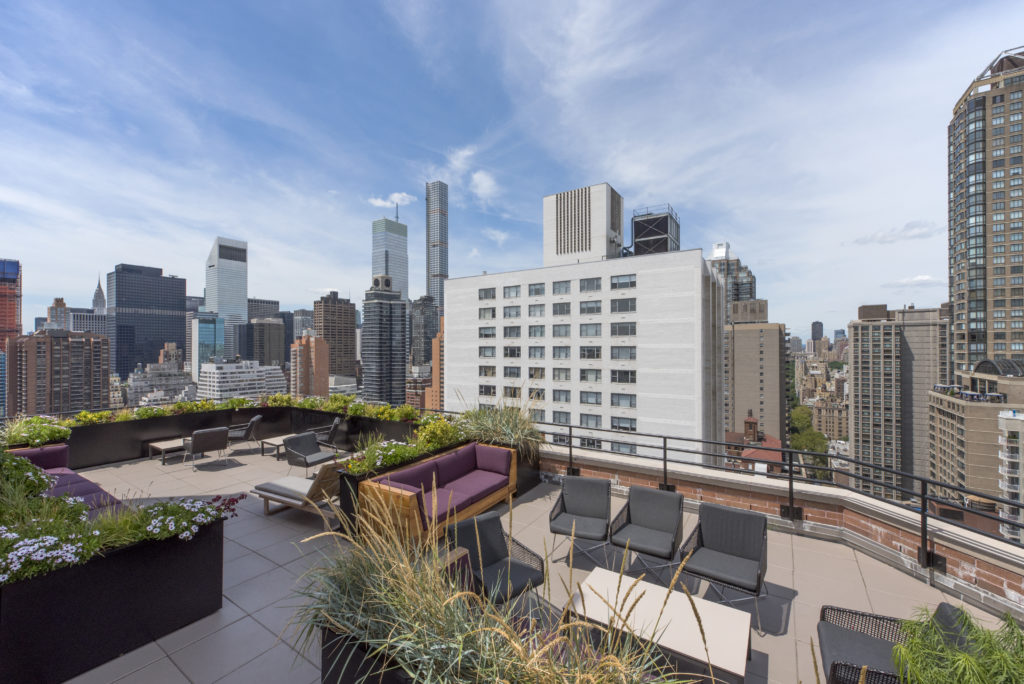
255 East 77
One of the most closely watched Upper East Side developments is 255 East 77th Street, developed by Naftali Group and designed by Robert A.M. Stern Architects.
The project combines classic limestone-inspired architecture with modern amenity programming and larger-scale residences. Amenities include a wellness center, pool, screening room, and golf simulator, while many residences feature formal layouts more reminiscent of older Upper East Side homes.
For buyers who want newer construction without an aggressively modern aesthetic, 255 East 77 represents one of the stronger examples of traditional Upper East Side design adapted for contemporary luxury living.
200 East 75th Street
Located just a few blocks from Central Park, 200 East 75th Street emphasizes larger residences and a more private residential feel.
Several layouts are designed around full-floor or expansive family-oriented configurations — a notable contrast to many newer Downtown projects that prioritize maximizing unit count and smaller layouts.
The project reflects an important aspect of the Upper East Side market: many buyers are purchasing for long-term use rather than purely investment purposes.
200 East 83rd
Designed by Robert A.M. Stern Architects, 200 East 83rd has become one of the more recognizable luxury condominium towers on the Upper East Side.
The building blends prewar-inspired architecture with modern construction and amenities, appealing to buyers who want newer infrastructure while maintaining a more traditional Upper East Side aesthetic.
The project also helped reinforce demand for high-end condominium product on the Upper East Side after years in which much of Manhattan’s luxury new development activity was concentrated Downtown.
The Harper
Located on East 86th Street, The Harper takes a more contemporary architectural approach compared to some of the limestone-style developments nearby.
Designed by ODA, the building emphasizes natural light, modern interiors, and outdoor connectivity. For buyers who prefer cleaner contemporary design while remaining on the Upper East Side, The Harper offers a distinctly different aesthetic from more traditional projects in the neighborhood.
1448 Third Avenue
1448 Third Avenue is one of the larger-scale condominium projects currently reshaping the Upper East Side skyline.
Located at the corner of Third Avenue and East 82nd Street, the project is being developed by Douglaston Development and designed by CetraRuddy. At approximately 39 stories, it will become one of the taller residential towers on the Upper East Side.
The development reflects the broader transformation occurring along the Third Avenue corridor, where improved transportation access and evolving buyer preferences have supported a new wave of luxury residential construction.
One of the notable aspects of 1448 Third Avenue is the larger average apartment size relative to many Manhattan new developments. Current plans suggest residences averaging roughly 1,800 square feet, which may appeal to buyers seeking larger full-time residences rather than smaller pied-à-terre layouts.
Architecturally, the project leans more contemporary than traditional limestone-style Upper East Side buildings such as 255 East 77 or 200 East 83rd. Buyers considering the project should also understand that Third Avenue offers a more active and urban environment compared to quieter side streets closer to Park or Madison Avenue.
For some buyers, that accessibility and energy is a positive. Others may prioritize a more traditional residential atmosphere deeper within the neighborhood.
Wei Min’s article, Manhattan Property Market Update
Investment Considerations
While the Upper East Side remains one of Manhattan’s most established residential neighborhoods, buyers should understand several tradeoffs when evaluating new developments here.
Upsides
-
- Larger average apartment sizes
- More practical layouts for long-term living
- Strong end-user buyer base
- Established neighborhood infrastructure
- Historically resilient long-term demand
- More residential atmosphere than many Downtown neighborhoods
Potential Downsides
-
- Rental competition can be significant in highly residential corridors
- Multiple luxury developments are delivering simultaneously
- Some projects trade at very high price per square foot levels
- Rental yields are often relatively modest
- Older nearby inventory can create pricing competition
For many buyers, however, Upper East Side condominium ownership is less about maximizing near-term yield and more about holding a long-duration Manhattan asset in one of the city’s most established residential neighborhoods.
The current wave of development reflects an important shift in Manhattan buyer preferences: many purchasers still want modern amenities and infrastructure, but increasingly prefer larger layouts, quieter streets, and architecture that feels more permanent and residential over highly transient luxury product.
What We Do
We focus on global investors buying Manhattan condos for portfolio diversification and long term return-on-investment.
1) Identify the right buy based on objectives
2) Manage the buy process
3) Rent out the property
4) Manage tenants
5) Market the property at the eventual sale