The Ugly Truth About Buying New Development in Manhattan
Posted by Wei Min Tan on July 17, 2026


Everyone loves new development.
Brand-new kitchens.
Resort-style amenities.
Beautiful sales galleries.
Glossy marketing brochures.
But after advising buyers in Manhattan for 20 years, I’ve learned that buying new development isn’t always the safest investment.
Some become iconic buildings.
Others quietly underperform.
Before paying the new development premium, here are five things every buyer should know.

Read about Wei Min’s style in Best Manhattan property agents and Role of a buyer’s broker.
1. You’re Usually Paying Tomorrow’s Prices Today
Developers price apartments based on where they believe the market is headed—not necessarily where it is today.
Unlike resale sellers, sponsors rarely “need” to sell quickly. Their goal is to maximize pricing for the entire building, which means early buyers often pay a premium.
If the market slows after closing, it can take years for prices to catch up.
Takeaway: Buying new doesn’t automatically mean buying value.
Weimin’s article, Manhattan property investment performance
2. The Building Has No Track Record
When you buy a resale condominium, you know how the building performs.
With a new development, you’re buying into an unknown.
Questions that can’t be answered on day one include:
-
- Will there be construction defects?
- Is the property management effective?
- Will the elevators and mechanical systems prove reliable?
- Will there be construction defects?
Only time reveals those answers.
Takeaway: You’re buying a promise, not a proven operating history.
3. Luxury Amenities Come with Luxury Expenses
Pools, spas, golf simulators, wine lounges and wellness centers all sound impressive.
They’re also expensive to maintain.
Many buyers focus on the purchase price but overlook the monthly common charges and ongoing carrying costs. Over time, these expenses can significantly reduce your investment returns.
If you’re renting it out, will rents be at a premium to offset the higher carry?
Takeaway: Evaluate the total cost of ownership—not just the purchase price.
Deal example: Client’s 4 bedroom at Four Seasons Downtown, 30 Park Place. Purchased at a good discount at resale, renovated and then rented in 2 weeks.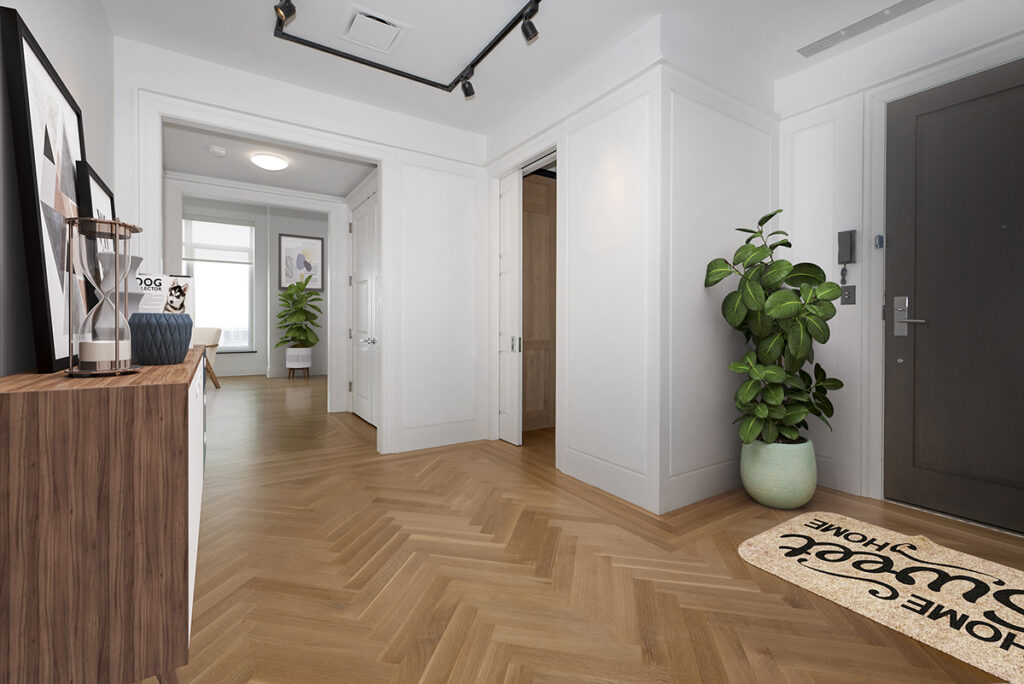
4. Your Biggest Competition
If you decide to sell while the developer still owns unsold units, you’re competing against a professional sales operation with model residences, marketing budgets and on-site sales staff.
That can make your apartment harder to sell, even in the same building.
Takeaway: Early resales are often more challenging than buyers expect.
5. New Doesn’t Always Mean Investment Grade
This is the biggest misconception.
Some of Manhattan’s best-performing investments are decades old.
Likewise, some spectacular new developments never achieve the resale performance buyers expected.
What drives long-term value isn’t the newest gym or the most luxurious lobby—it’s the fundamentals:
-
- Irreplaceable location
- Excellent floor plans
- Natural light
- Scarcity
- Broad buyer appeal
- Realistic purchase price
Takeaway: Buy the right apartment, not just the newest building.
Weimin’s article, What Makes a Manhattan Apartment Investment Grade? A Framework for Long-Term Value
Final Thoughts
A new development can be an outstanding purchase—but only if the fundamentals justify the premium.
The smartest buyers don’t ask, “Is this brand new?”
They ask, “Will someone still want to pay a premium for this apartment ten or twenty years from now?”
What We Do
We focus on global investors buying Manhattan condos for portfolio diversification and long term return-on-investment.
1) Identify the right buy based on objectives
2) Manage the buy process
3) Rent out the property
4) Manage tenants
5) Market the property at the eventual sale