



Assets That Make Sense Across Generations
Posted by Wei Min Tan on April 7, 2026



In an era defined by rapid technological change, shifting monetary policy, and evolving lifestyle preferences, one question continues to matter for serious investors:
Which assets actually endure?
Not just perform—but persist. Across cycles. Across generations.
Because true wealth is not just created. It is transferred.

Read about Wei Min’s style in Best Manhattan property agents and Role of a buyer’s broker.
The Generational Lens
Different generations approach capital differently:
-
- First generation (wealth creators): prioritize growth and opportunity
- Second generation (wealth preservers): prioritize stability, income and downside protection
- Third generation (wealth inheritors): often prioritize liquidity, flexibility, and lifestyle alignment
Most portfolios aren’t built for this shift.
They work for one stage—but not the next.
The best assets are ones that make sense for all three.
Wei Min’s article, Generational Wealth Creation through Manhattan Property Investment
What Makes an Asset “Intergenerational”?
There are four consistent characteristics:
1. Ongoing Demand
The asset fulfills a need that does not disappear with time—housing, prime location, core infrastructure.
2. Scarcity
Not easily replicated. Ideally constrained by geography, regulation and limited supply.
3. Inflation Resilience
Able to reprice over time, either through income (rent) or increasing value.
4. Transferability
Simple to understand, finance, and pass on—legally and psychologically.
Client’s West Village investment condo which we negotiated during Covid lockdown in May 2020. Got amazing terms and price. This 12th floor apartment has a lot of blue sky views, a rare feature in Manhattan.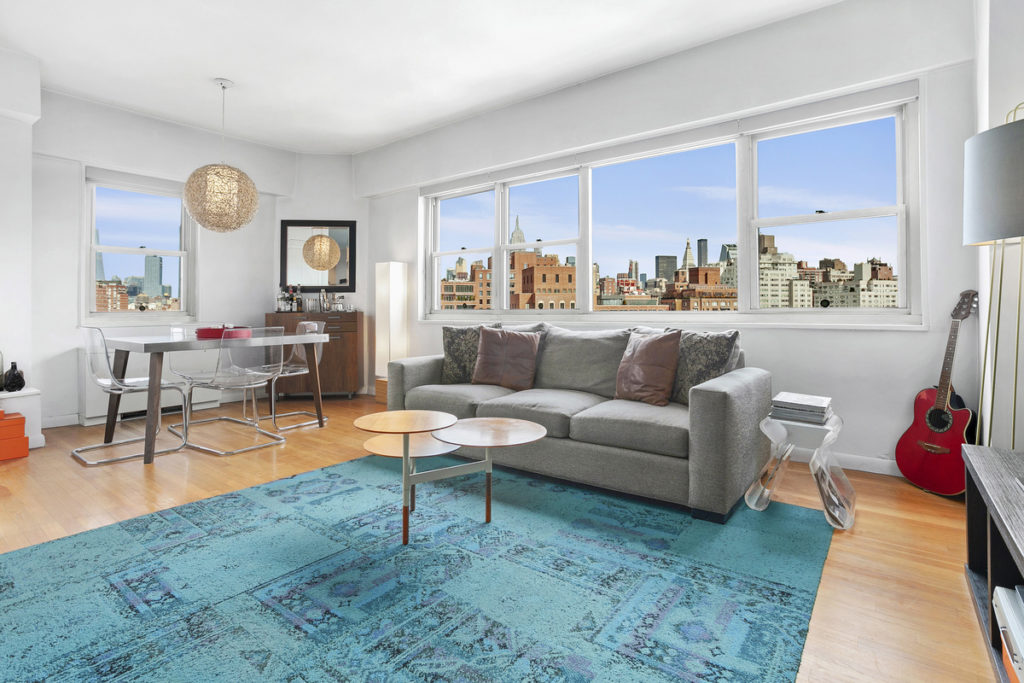
Why Prime Real Estate Stands Out
Among all asset classes, prime real estate—particularly in global gateway cities like New York City, specifically Manhattan —consistently checks all four boxes.
It is not just an investment. It is a store of relevance.
-
- Demand is structural: global capital, limited land, enduring desirability
- Supply is finite: especially in core Manhattan submarkets
- Income is tangible: rental demand from high-quality tenants
- Legacy value: easily understood across cultures and generations
This is why, for many high-net-worth Asian families, Manhattan real estate is not viewed purely through an IRR lens—but as a capital preservation anchor with optionality – either to rent out or for self use.
Wei Min’s article, Manhattan Condo Historical Price Trend
Beyond Returns: The Intangible Layer
Certain assets carry non-financial utility:
-
- A Manhattan condo provides a foothold in a global city
- It supports children studying or working abroad
- It enhances mobility, status, and optionality
These factors rarely show up in spreadsheets—but often drive long-term decision-making.
The Portfolio Role
Intergenerational assets are not meant to dominate a portfolio.
They are meant to stabilize it.
Think of them as:
-
- The core of a portfolio
- The stable part during market swings
- The bridge between generations
Higher-risk, higher-return assets will always have a place.
But without a core that endures, wealth becomes fragile.
Client’s three-bedroom condo with open views, we rented out in 1 week. We targeted larger sized apartments post Covid in anticipation of the market’s need for more space.
The Quiet Advantage
The most sophisticated investors increasingly recognize this:
-
- The goal is not to maximize returns in one lifetime.
- The goal is to preserve and compound capital across multiple.
Assets that make sense across generations are rarely the most exciting.
They are rarely the fastest-growing.
But they are the ones that are still there—decades later, quietly doing their job.
What We Do
We focus on global investors buying Manhattan condos for portfolio diversification and long term return-on-investment.
1) Identify the right buy based on objectives
2) Manage the buy process
3) Rent out the property
4) Manage tenants
5) Market the property at the eventual sale