Land Lease Risk in Manhattan Condos: What Investors Must Know Before Buying
Posted by Wei Min Tan on September 21, 2026


A Capital Allocation Perspective for HNW Families
When allocating capital from operating businesses into Manhattan residential real estate, the question is not simply price per square foot. The deeper question is: Do you own the land — or are you leasing it long-term?
For many Asian-American families — especially those with roots in Singapore, Hong Kong, Taiwan, Mainland China, or Malaysia — this distinction feels intuitive. In much of Asia, land tenure structures matter. Freehold commands a premium. Leasehold trades differently. Manhattan is often viewed as a fee-simple market — full ownership of land and structure.
But not always. Some condominiums operate on ground leases, where the building sits on land owned by another party.
For families allocating capital with a 20–30 year horizon — or thinking inter-generationally — this is not a technical footnote. It affects control, liquidity, and long-term pricing power.

Read about Wei Min’s style in Best Manhattan property agents and Role of a buyer’s broker.
Understanding Ground Leases in Manhattan
In a ground lease structure:
-
- A third party owns the land.
- The condominium owns the building improvements.
- The condo (via common charges) pays ground rent.
- The lease has a defined expiration term.
- Renewal terms may be uncertain.
The key underwriting questions are:
-
- Who owns the land?
- How many years remain?
- How does ground rent reset?
- What happens at expiration?
Not all land leases carry the same risk.
Wei Min’s article, How Manhattan real estate functions as an offshore USD denominated balance sheet asset with embedded liquidity
Government-Controlled Land: Institutional Structure
Battery Park City
Battery Park City is the most well-known land-lease example in Manhattan. Here, the land is owned by the Battery Park City Authority, a New York State public benefit corporation.
For many Asian investors, this resembles government master land systems familiar in:
-
- Singapore’s 99-year leasehold framework
- Hong Kong’s government land ownership structure
The critical distinction: This is institutional land, not private economic negotiation. The lease terms are transparent and regulated. The landowner is not a private family seeking to maximize redevelopment value.
While Battery Park City properties may trade at modest discounts to comparable fee-simple buildings, the structure is understood and priced by the market.
It is not “no risk.” But it is structured risk.
Tribeca Green in Battery Park. Great value buy because it’s a Condop yet gets luxury condo rents. Represented multiple buyers at this conversion project.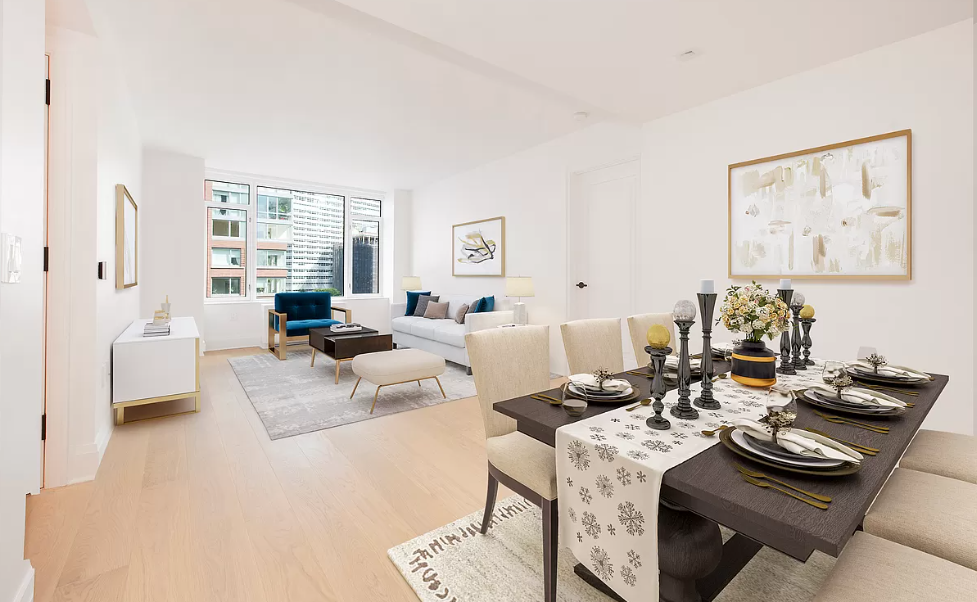
Privately Owned Land: Different Risk Profile
In other Manhattan cases, the land beneath the building may be owned by:
-
- A private family
- A religious institution
- An estate
- A private investment entity
This is where underwriting discipline becomes critical.
Key Considerations:
1. Lease Term Remaining
If fewer than 40–50 years remain, financing can tighten.
Liquidity may weaken.
Resale discounts can widen.
Banks typically require minimum remaining lease terms to lend.
2. Ground Rent Escalation
Does ground rent reset to market value?
Is there a fixed escalation schedule?
Is renewal pre-negotiated?
An aggressive reset can materially affect carrying costs.
3. Reversion Risk
At expiration, the landowner may regain rights to the land — and potentially the improvements — depending on the lease structure. Even if unlikely, the mere possibility influences long-term pricing.
4. Exit Liquidity for the Next Generation
If your children decide to sell in 25 years, will:
-
- Buyers obtain financing easily?
- The building trade at a structural discount?
- The asset remain institutionally acceptable?
This is not about today’s cap rate.
It is about tomorrow’s liquidity.
Wei Min’s article, Why international families invest in Manhattan real estate
Why This Matters for Capital Preservation
Many HNW Asian families allocate to Manhattan for reasons beyond yield:
-
- USD diversification
- Educational foothold
- Wealth preservation outside operating businesses
- A long-term store of value
The thesis often rests on:
-
- Rule-of-law stability
- Irreplaceable urban land
- Limited supply
- Global capital demand
A private land lease introduces a structural asymmetry: You own the apartment — but not the land beneath it.
That nuance may be acceptable — if priced correctly and underwritten intentionally.
But it should never be accidental.
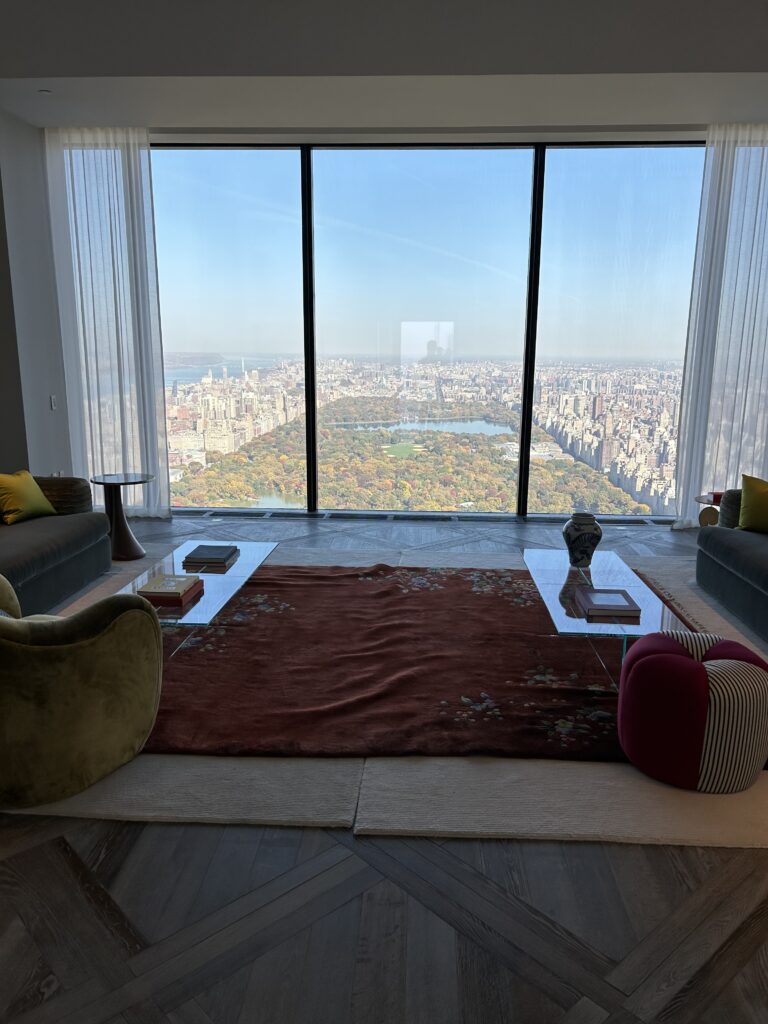
View from 111 W 57 (not land lease), which has the best location amongst the four Billionaire’s Row condos because it’s right in the middle of Central Park.
Pricing: Is the Discount Real Value?
Land-lease condos often trade at:
-
- Lower price per square foot
- Higher apparent yield
- Noticeable discounts to fee-simple comparables
The discount exists for a reason:
-
- Lease term uncertainty
- Financing constraints
- Renewal negotiation risk
- Future liquidity questions
Sometimes the discount is attractive relative to risk.
Sometimes it is a value trap disguised as “cheap.”
Sophisticated allocators understand:
Paying a premium for structural certainty is often rational.
This is why in Singapore, freehold commands a premium over 99-year leasehold.
The same psychology applies in Manhattan.
Strategic Allocation Framework
When evaluating a Manhattan condo with land-lease exposure:
-
- Identify the landowner (government vs private).
- Confirm remaining lease term.
- Model ground rent escalations.
- Assess bank financing sensitivity.
- Underwrite resale 20–30 years forward.
- Determine whether the pricing discount compensates for structural risk.
If the goal is generational capital preservation, fee-simple ownership remains the cleanest structure.
If allocating to a land-lease building, it should be:
-
- Intentional
- Deeply underwritten
- Appropriately discounted
Final Thought
Manhattan remains one of the world’s most transparent and institutionally stable real estate markets.
But not all ownership structures are equal.
For families thinking in decades — not quarters — control of the land is not a small detail.
It is the foundation of the thesis.
What We Do
We focus on global investors buying Manhattan condos for portfolio diversification and long term return-on-investment.
1) Identify the right buy based on objectives
2) Manage the buy process
3) Rent out the property
4) Manage tenants
5) Market the property at the eventual sale